Hotline: +84 928 718 688
No. 49, Lane 147 Vu Xuan Thieu Street, Group 12, Phuc Loi Ward, Ha Noi, Vietnam
Vietnam has become an important sourcing destination for international fashion brands, wholesalers, retailers, and apparel importers. With an established textile and garment industry, experienced labor, diverse production capabilities, and strong export infrastructure, the country offers various manufacturing models for overseas buyers.
Among these models, FOB garment manufacturing in Vietnam is widely used by buyers who want manufacturers to handle a larger portion of the production and export process. Understanding how FOB works, what services are included, and how to a suitable supplier can help international buyers manage sourcing costs, product quality, and delivery schedules more effectively.
FOB stands for Free On Board, an international trade term commonly used in global sourcing and shipping.
In garment manufacturing, an FOB supplier generally takes responsibility for sourcing materials, organizing production, controlling quality, packing finished garments, completing agreed export procedures, and delivering the goods on board the vessel at the designated port of shipment.
Depending on the agreement, the manufacturer may handle:
Fabric and textile sourcing
Trims and accessory procurement
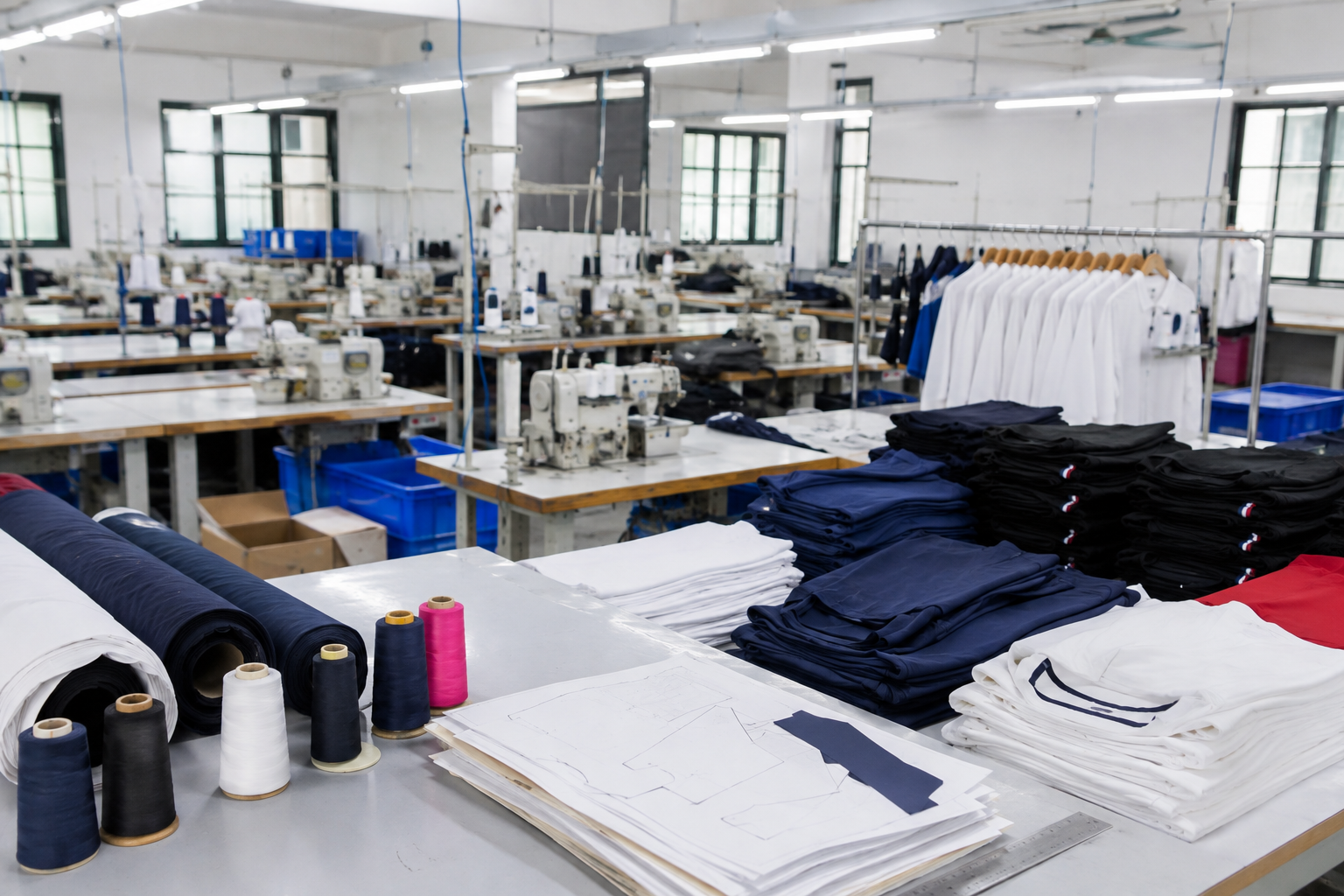
Pattern development and sampling
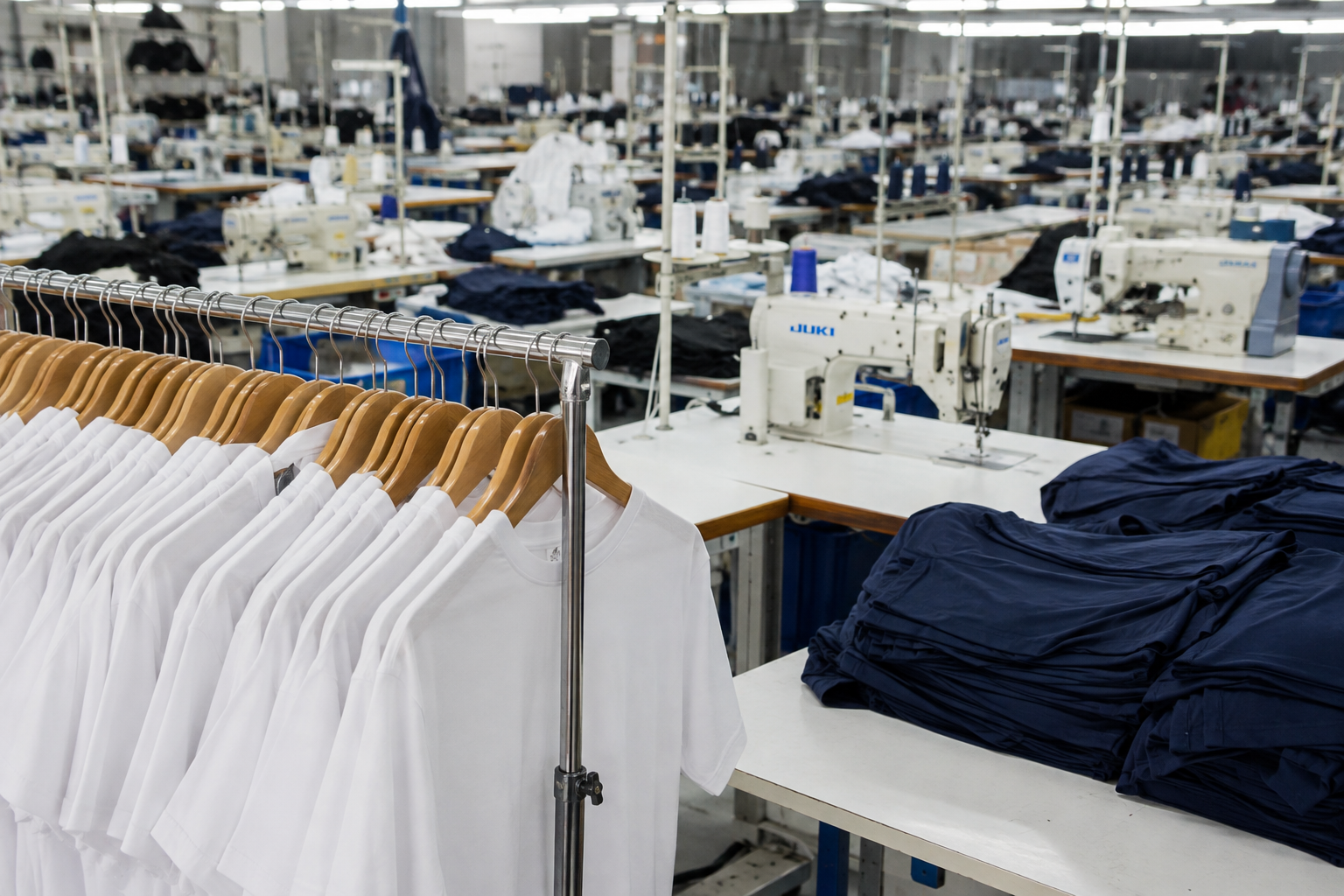
Cutting and sewing
Printing and embroidery
Finishing and ironing
Quality inspection
Packing and labeling
Export documentation
Delivery to the agreed port
Once the goods are loaded on board according to the agreed FOB terms, responsibility transfers in accordance with the applicable sales contract and Incoterms® rules.
For international buyers, this model can simplify garment sourcing because many production activities are coordinated through a single manufacturing partner.
A typical FOB garment production process in Vietnam involves several stages.
The buyer provides the manufacturer with technical and commercial information such as:
Garment design
Tech pack
Fabric specifications
Size chart
Color requirements
Printing or embroidery details
Labels and packaging requirements
Target quantity
Required delivery schedule
Clear specifications at this stage help manufacturers prepare more accurate quotations and production plans.
After confirming the product requirements, the manufacturer sources suitable fabrics, trims, labels, buttons, zippers, threads, packaging materials, and other components.
Depending on the garment category and buyer requirements, materials may be sourced domestically or imported.
Samples are developed before bulk production. Depending on the project, these may include development samples, fit samples, size-set samples, pre-production samples, or other samples requested by the buyer.
The buyer reviews details such as fit, measurements, fabric, construction, workmanship, colors, and finishing before approving production.
Once the necessary samples and materials are approved, the factory begins bulk manufacturing.
The production process may include:
Fabric inspection => Cutting => Printing/Embroidery => Sewing => Finishing => Inspection => Packing
Production procedures vary depending on the garment type and technical requirements.
Quality control should be implemented throughout production rather than only after garments are completed.
Common checkpoints include:
Incoming fabric inspection
Measurement verification
Cutting accuracy
Sewing workmanship
Seam and stitch quality
Print or embroidery quality
Color consistency
Label placement
Final appearance
Packaging requirements
International buyers may also arrange independent third-party inspections when required.
Finished garments are folded, tagged, labeled, packed, and prepared according to the buyer's instructions.
Under an FOB arrangement, the supplier coordinates the agreed export procedures and delivers the shipment to the designated port for loading.
International buyers sourcing apparel from Vietnam may encounter both FOB and CMT manufacturing models.
CMT stands for Cut, Make and Trim. Under a traditional CMT arrangement, the buyer typically has greater responsibility for supplying or arranging major materials, while the factory focuses mainly on garment production.
FOB manufacturing usually involves broader supplier responsibility.
| Factor | CMT Manufacturing | FOB Manufacturing |
|---|---|---|
| Fabric sourcing | Mainly buyer-controlled | Usually manufacturer-managed |
| Trim sourcing | Buyer or manufacturer | Usually manufacturer-managed |
| Sampling | Available | Available |
| Cutting & sewing | Manufacturer | Manufacturer |
| Production management | Shared | Greater supplier involvement |
| Export coordination | Depends on contract | Usually included to agreed FOB point |
| Buyer involvement | Higher | Generally lower |
| Supply chain management | More fragmented | More integrated |
For buyers without their own sourcing team in Vietnam, FOB production can provide a more streamlined procurement process.
Instead of coordinating separately with fabric mills, accessory suppliers, factories, packing companies, and logistics providers, buyers can work with one primary manufacturing partner.
This reduces the number of parties that must be managed during production.
Established Vietnamese garment manufacturers often maintain relationships with textile mills and accessory suppliers in Vietnam and other Asian manufacturing markets.
This can help buyers identify materials that meet their specifications, budget, and production requirements.
When material sourcing and garment manufacturing are managed within the same supply chain, factories can coordinate purchasing, sampling, production scheduling, inspection, and packing more efficiently.
Vietnam's garment sector has extensive experience producing apparel for export markets. Manufacturers may be familiar with international buyer requirements concerning technical specifications, packaging, labeling, quality control, and shipping documentation.
Depending on the supplier's capabilities, FOB production can be applied to many apparel categories, including:
T-shirts and polo shirts
Shirts and blouses
Dresses and skirts
Jackets and outerwear
Sportswear
Workwear and uniforms
Children's clothing
Promotional apparel
Event clothing
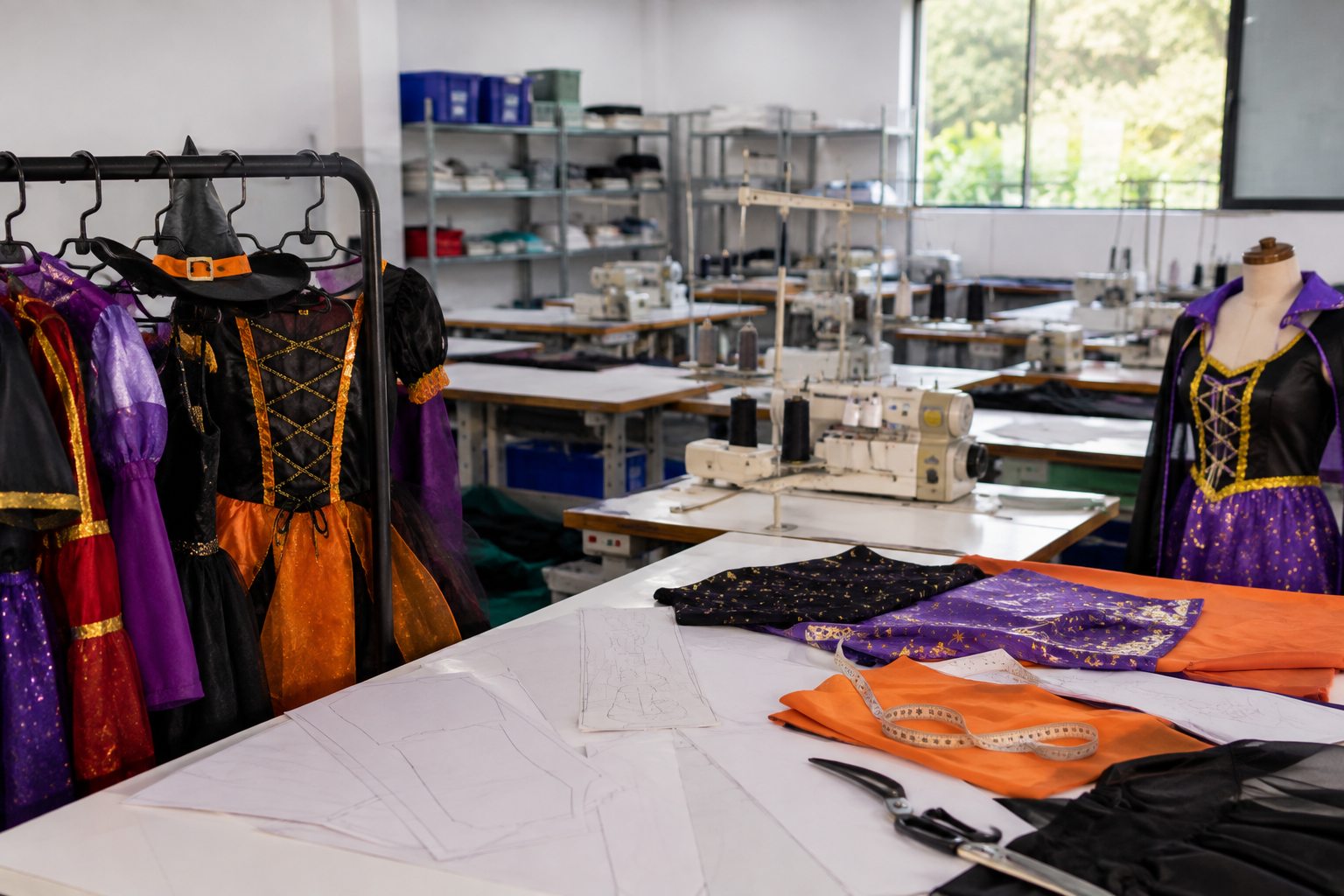
Carnival and seasonal costumes
Buyers should still verify whether a factory has proven experience with their specific product category.
Choosing a suitable supplier involves more than comparing unit prices.
Buyers should evaluate the factory's equipment, workforce, production lines, monthly capacity, technical capabilities, and experience with similar garments.
A manufacturer that performs well with basic T-shirts may not necessarily have the equipment or technical expertise required for complex jackets, costumes, or highly detailed garments.
Ask potential suppliers where they source fabrics and accessories and whether they can meet specific requirements regarding:
Fiber composition
Fabric weight
Color
Hand feel
Performance
Certification
Special finishes
Material availability can significantly affect pricing and lead times.
MOQ requirements vary considerably among garment factories.
Buyers should confirm MOQ by style, color, size, fabric, or total order quantity before proceeding with development.
Sampling provides an early indication of a supplier's technical competence.
Buyers should assess:
Pattern accuracy
Measurement accuracy
Sewing quality
Material ion
Print or embroidery execution
Communication during revisions
Repeated sampling problems may indicate potential difficulties during bulk production.
A reliable FOB garment manufacturer should have defined inspection procedures for raw materials, production, finished products, and packing.
Buyers should ask how defects are identified, recorded, corrected, and prevented from recurring.
Lead time should be evaluated from material sourcing through shipment rather than considering sewing time alone.
Potential delays may occur during:
Fabric development
Lab-dip approval
Accessory sourcing
Sample revisions
Bulk material production
Garment manufacturing
Final inspection
A realistic production schedule should include these stages.
International buyers should also evaluate whether the manufacturer regularly handles export orders.
Relevant experience may include commercial documentation, packing requirements, carton markings, shipping coordination, and communication with freight forwarders.
Before confirming an order, international buyers should discuss several key points with potential manufacturers:
What garment categories do you specialize in?
What is your monthly production capacity?
What is your minimum order quantity?
Can you source fabrics and trims according to our specifications?
Which materials are sourced locally and which are imported?
What samples are required before bulk production?
What is the estimated sampling and production lead time?
What quality control procedures do you follow?
Can you support custom labels and packaging?
Which export markets have you previously supplied?
What exactly is included in your FOB quotation?
Which port of shipment will be specified in the FOB term?
These questions help buyers compare suppliers based on actual production capabilities rather than price alone.
An FOB garment quotation can include several cost components, depending on the commercial agreement.
Typical factors include:
Main fabric
Lining
Trims and accessories
Labels
Printing
Embroidery
Cutting and sewing
Finishing
Quality control
Packaging
Inland transportation
Agreed export-related charges
Garment complexity also has a significant impact on pricing.
A basic T-shirt with standard fabric and simple construction will generally require fewer production processes than a multi-layer costume featuring several fabrics, accessories, prints, embroidery, or decorative components.
Buyers should therefore provide complete specifications when requesting quotations.
FOB manufacturing can simplify sourcing, but buyers still need effective supplier management.
A fabric that looks similar in photographs may differ in weight, texture, stretch, color, or performance.
Physical samples and clearly defined specifications can reduce this risk.
Incomplete tech packs or unclear instructions may lead to repeated revisions.
Important product requirements should be documented rather than communicated only through informal messages.
Production schedules depend on material availability, factory capacity, product complexity, and order volume.
Buyers should allow sufficient time for development, approval, manufacturing, inspection, and export preparation.
Quality expectations should be agreed before bulk production. Approved samples, measurement charts, workmanship standards, and inspection criteria provide useful references for both parties.
International buyers can reduce sourcing risks by establishing clear procedures from the beginning.
A practical approach includes:
Preparing detailed tech packs
Confirming material specifications
Approving samples before production
Defining acceptable quality standards
Confirming MOQ and pricing in writing
Establishing production milestones
Monitoring material readiness
Conducting inspections when necessary
Confirming packaging and labeling requirements
Reviewing shipping documents before dispatch
For new supplier relationships, buyers may also consider beginning with a manageable initial order before increasing volume.
Vietnam continues to attract international apparel buyers because it combines established garment manufacturing infrastructure with a workforce experienced in export production.
The country is particularly relevant for buyers seeking suppliers capable of handling multiple stages of the garment supply chain, from material sourcing and sample development to bulk production and export preparation.
However, the suitability of a Vietnamese manufacturer depends on the buyer's specific requirements. Production capacity, technical specialization, sourcing networks, quality systems, MOQ, pricing, and delivery performance should all be evaluated before placing an order.
FOB garment manufacturing in Vietnam can be an effective sourcing model for international buyers who want a manufacturer to manage both garment production and a significant portion of the upstream supply chain.
A capable FOB supplier can coordinate fabric and trim sourcing, sampling, bulk manufacturing, quality control, packing, and export preparation under one production framework. This allows overseas buyers to reduce supply chain complexity while maintaining control through clear specifications, approvals, and quality standards.
For brands, wholesalers, importers, and apparel sourcing companies considering Vietnam, the key is to evaluate manufacturers based not only on price but also on production capability, material sourcing expertise, quality management, communication, lead time, and export experience.
Selecting the right FOB garment manufacturing partner can support more consistent production, predictable delivery schedules, and long-term apparel sourcing relationships in Vietnam.
CATEGORIES
Women’s fine horizontal-striped festival apparel
Women’s fine horizontal-striped festival apparel
Festival long-sleeve crew-neck apparel
Festival long-sleeve turtleneck apparel
Striped festival crossbody bag
Short-sleeve sailor-style festival top
Women’s fine horizontal-striped festival apparel
Women’s fine horizontal-striped festival apparel
FOB Garment Manufacturing in Vietnam: A Complete Guide for International Buyers
How Topaz Clothing Supports Seasonal Apparel Programs with Reliable Lead Times
How to Choose a Reliable Seasonal Costume Manufacturer in Vietnam
FOB vs. OEM Garment Manufacturing: What International Buyers Should Know
Key Factors When Sourcing Carnival and Event Apparel from Vietnam
Featured Products & Services
*YOU MAY ALSO LIKE
We look forward to establishing a successful and long-term cooperation with your company.
Address: No. 49, Lane 147 Vu Xuan Thieu Street, Group 12, Phuc Loi Ward, Ha Noi, Vietnam
Hotline: +84 928718688
Topaz Clothing JSC is a Vietnam-based garment manufacturer specializing in FOB production for seasonal wear, carnival costumes, and event apparel, established in 2014.
Topaz Orion Import Export Company Limited
Address: No. 49, Lane 147 Vu Xuan Thieu Street, Group 12, Phuc Loi Ward, Ha Noi, Vietnam
Hotline: +84 928718688
Topaz Orion Import Export Company Limited
Địa chỉ: No. 49, Lane 147 Vu Xuan Thieu Street, Group 12, Phuc Loi Ward, Ha Noi, Vietnam
Business Registration Certificate No. 0111425424 – Issued by the Department of Planning and Investment of Ha Noi on March 23, 2026
Responsible for content - Ms Loan
@ Copyright by Topaz Orion Import Export Company Limited. Designed by Vietnam Yellow Pages.